Challenge
Appley Rotten was a character brand I created over twenty years ago, with a rich history of media and products. In the last few years, the property had gone dormant, with no retail or online presence to speak of. I wanted to bring the character back online and deliver new content and experiences for modern audiences, but lacked the time and resources to fully develop the experience as I had in previous years.
With the emergence of powerful AI tools, I saw a path to moving quickly to utilize existing assets and build a clean, scalable platform for a relaunch.
Discovery
Online history
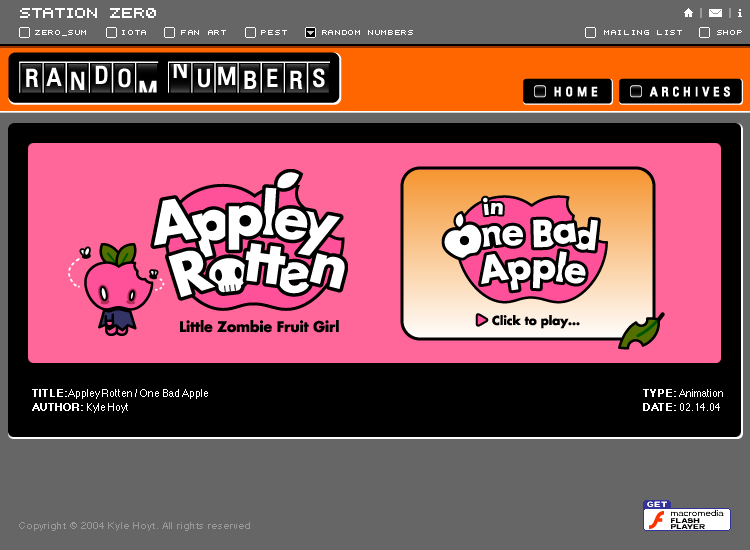
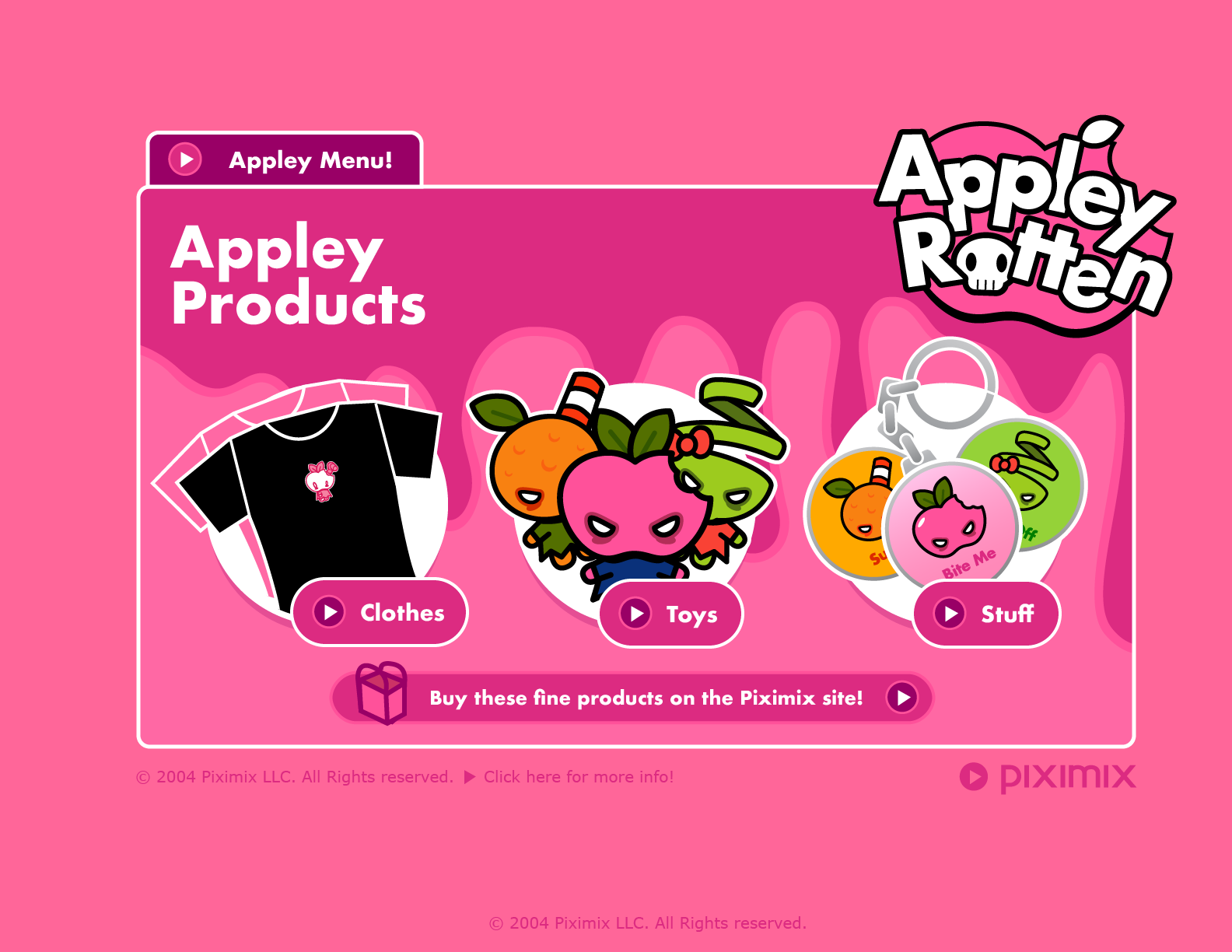
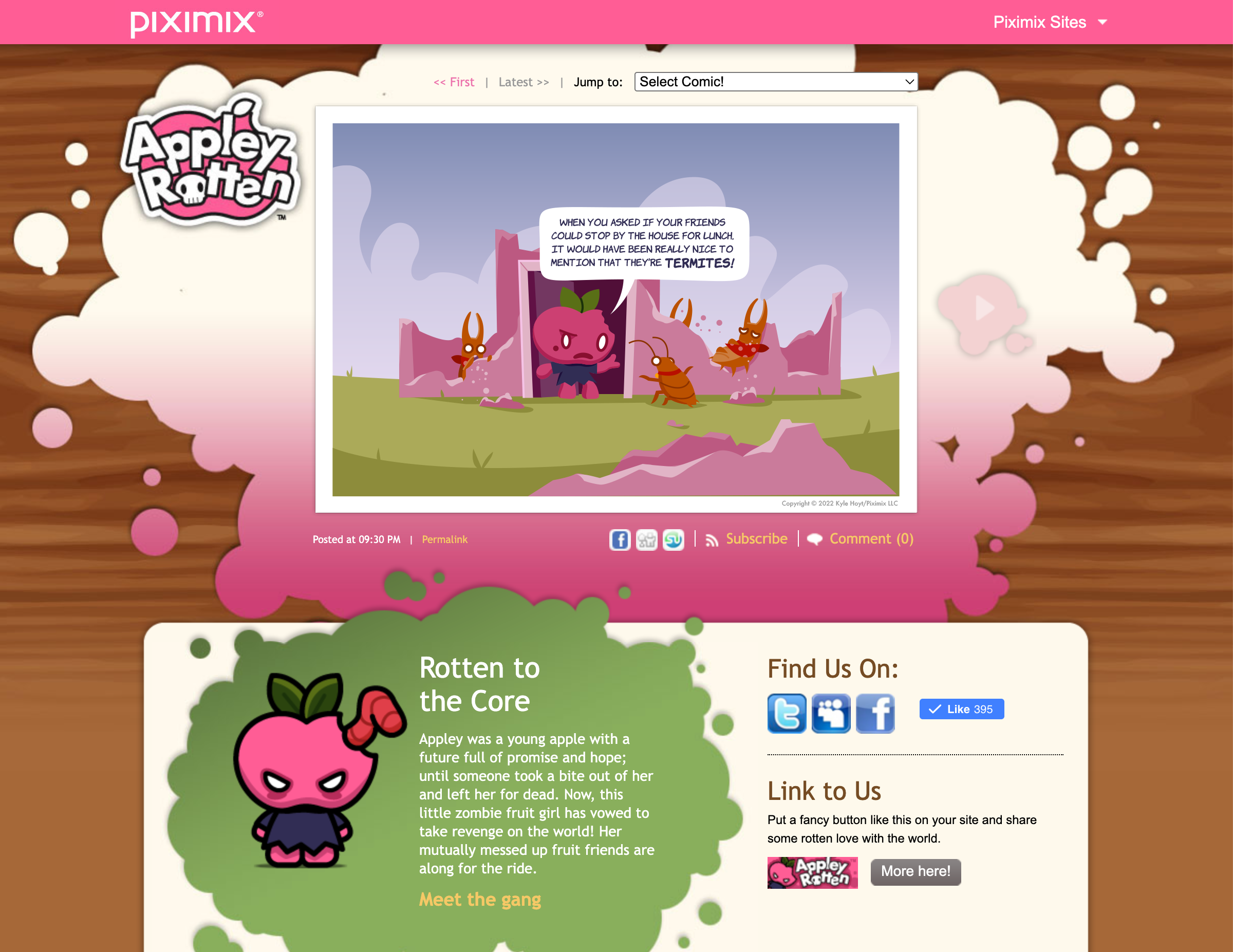
Appley Rotten started as a Flash animation on my personal site in 2004, grew into a full character goods brand with a dedicated Flash website and then a long-running webcomic on the Typepad blogging platform. The property went offline when TypePad shut down in 2025.
Comics had proven to be a strong traffic driver for Appley Rotten and represented the deepest well of content for a new online experience. After losing the blog, I explored migrating to WordPress or a modern comics platform like WEBTOON, but both meant working within a standardized experience with dependency on a third party.
AI tool evaluation
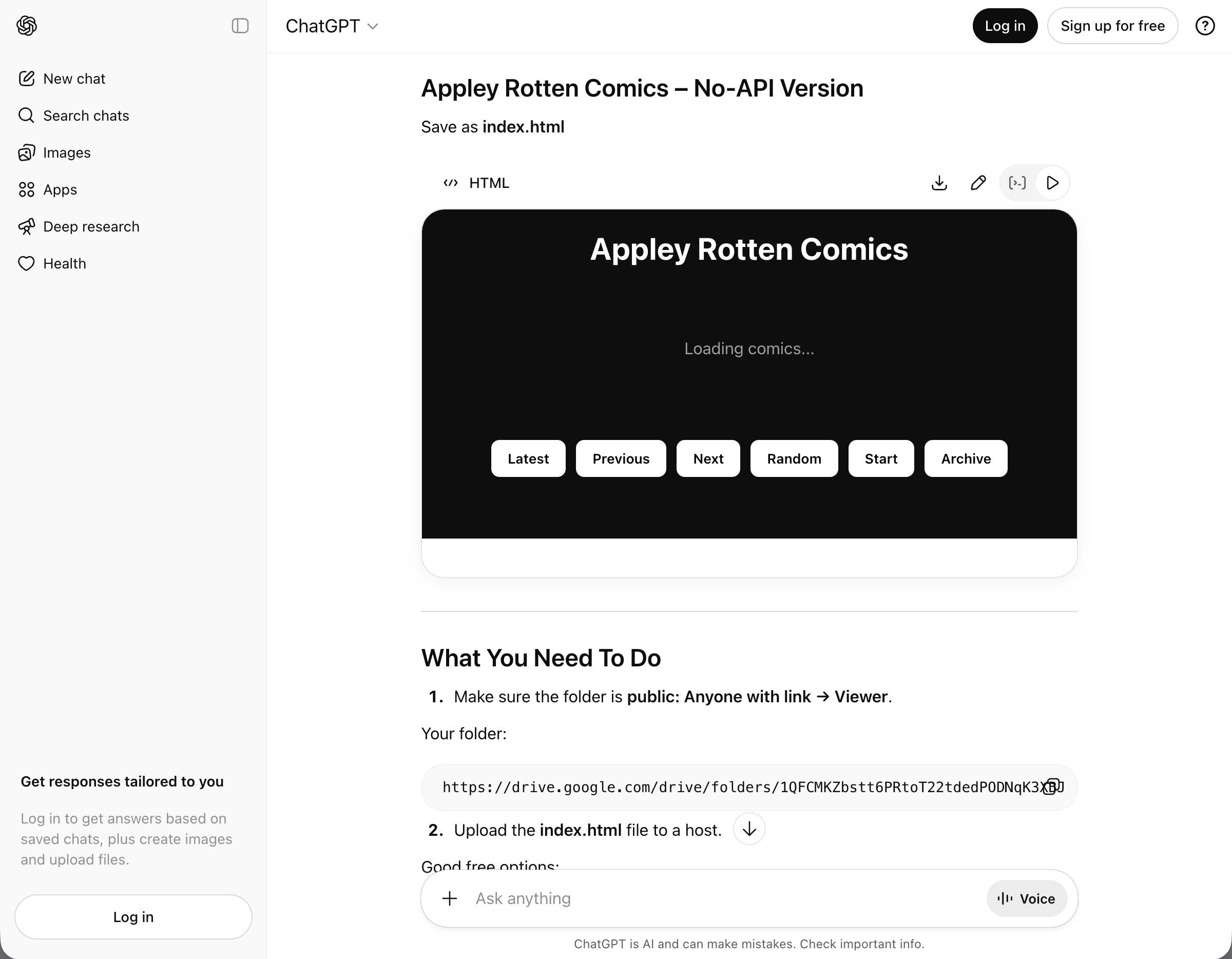
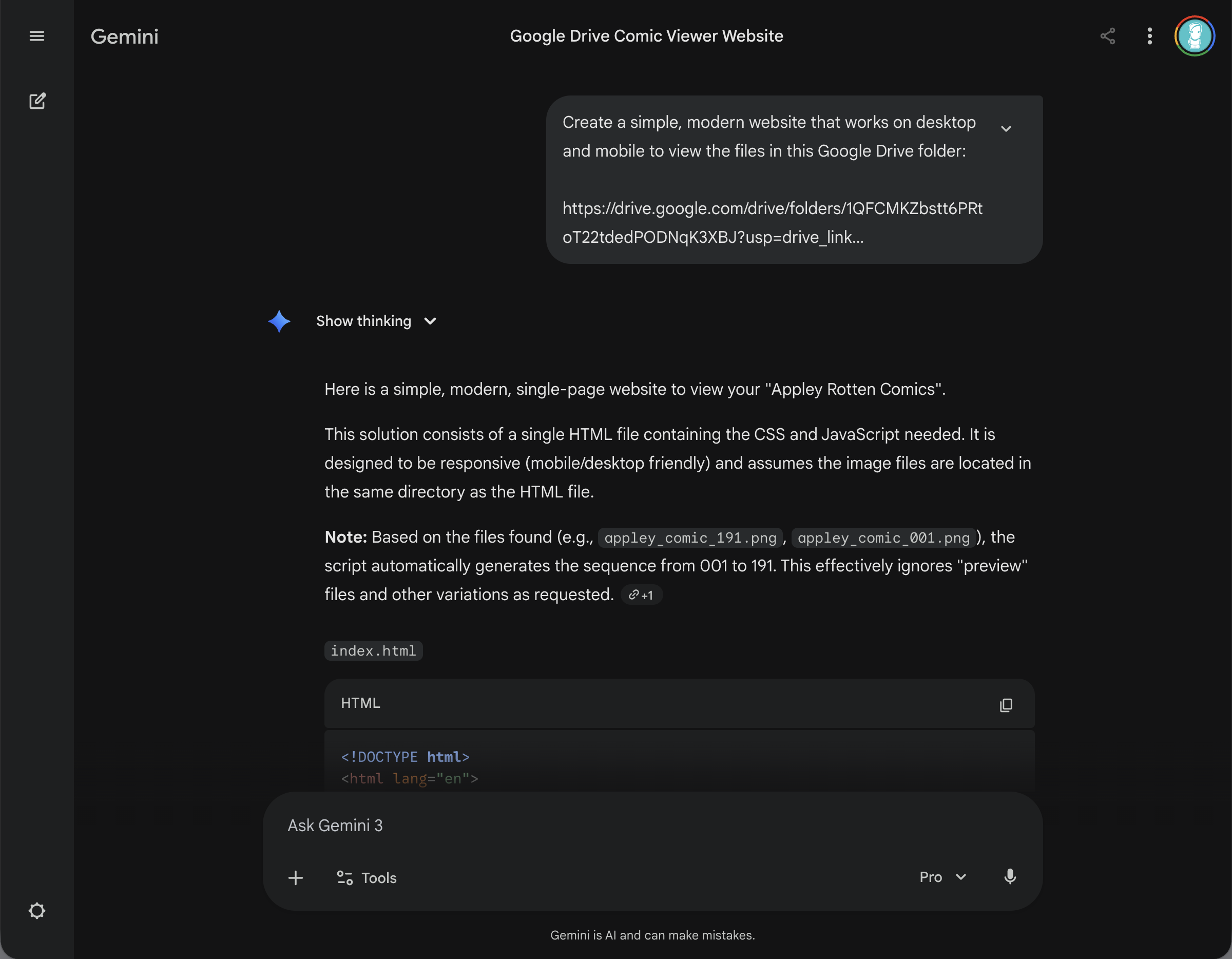
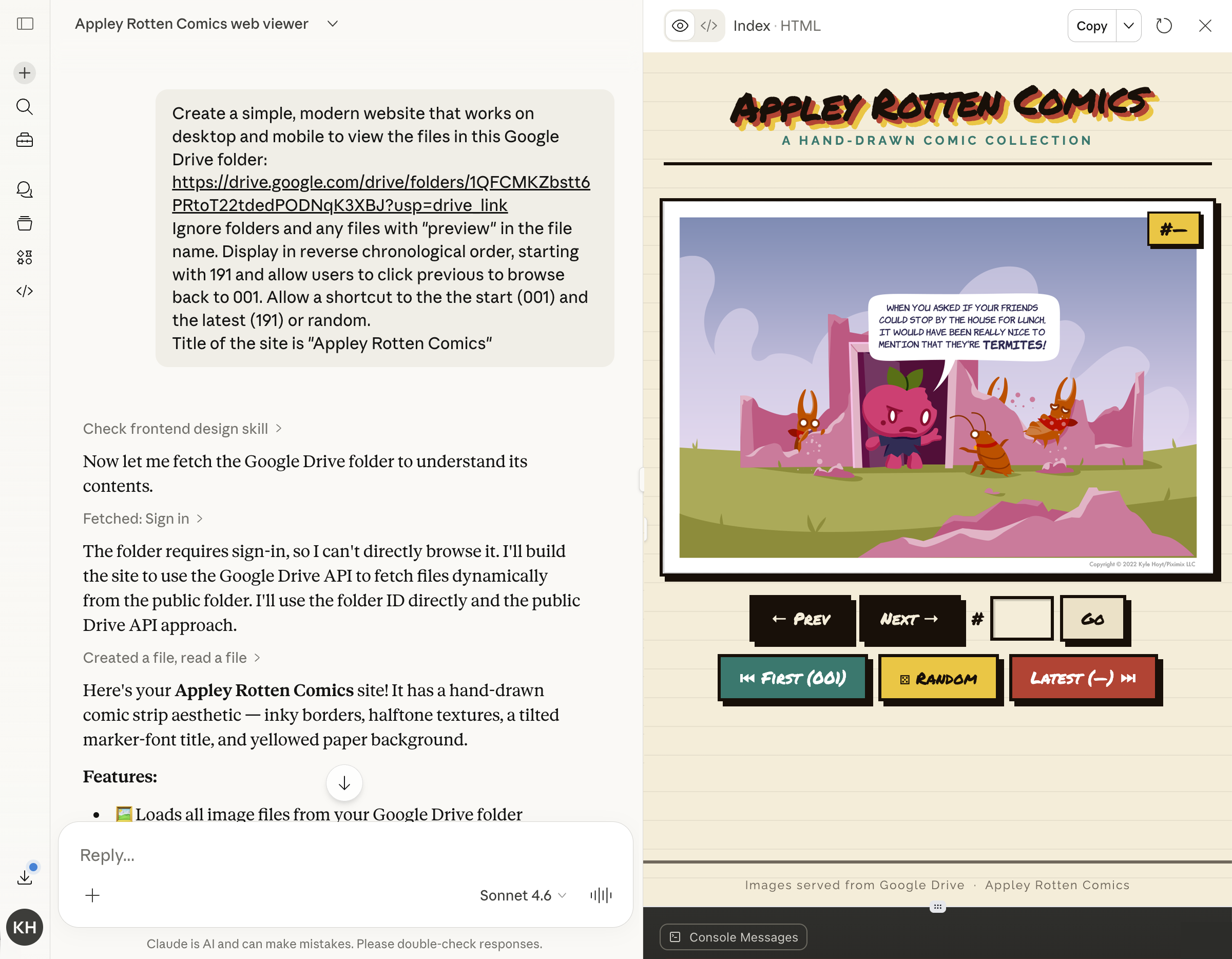
With modern AI tools, I determined I could build a uniquely independent experience from scratch. I provided the same prompt to the three leading candidates — ChatGPT, Google Gemini, and Claude — using a folder of a few hundred comic image files and reference materials to create a prototype for a fully branded, responsive image viewer.
Key findings:
- While all models produced serviceable first prototypes, Gemini hit closest to the target functionality and presentation
- Gemini's image and video capabilities made it the primary tool throughout implementation
- Claude was generally better at suggesting and revising written text
Design
The core experience
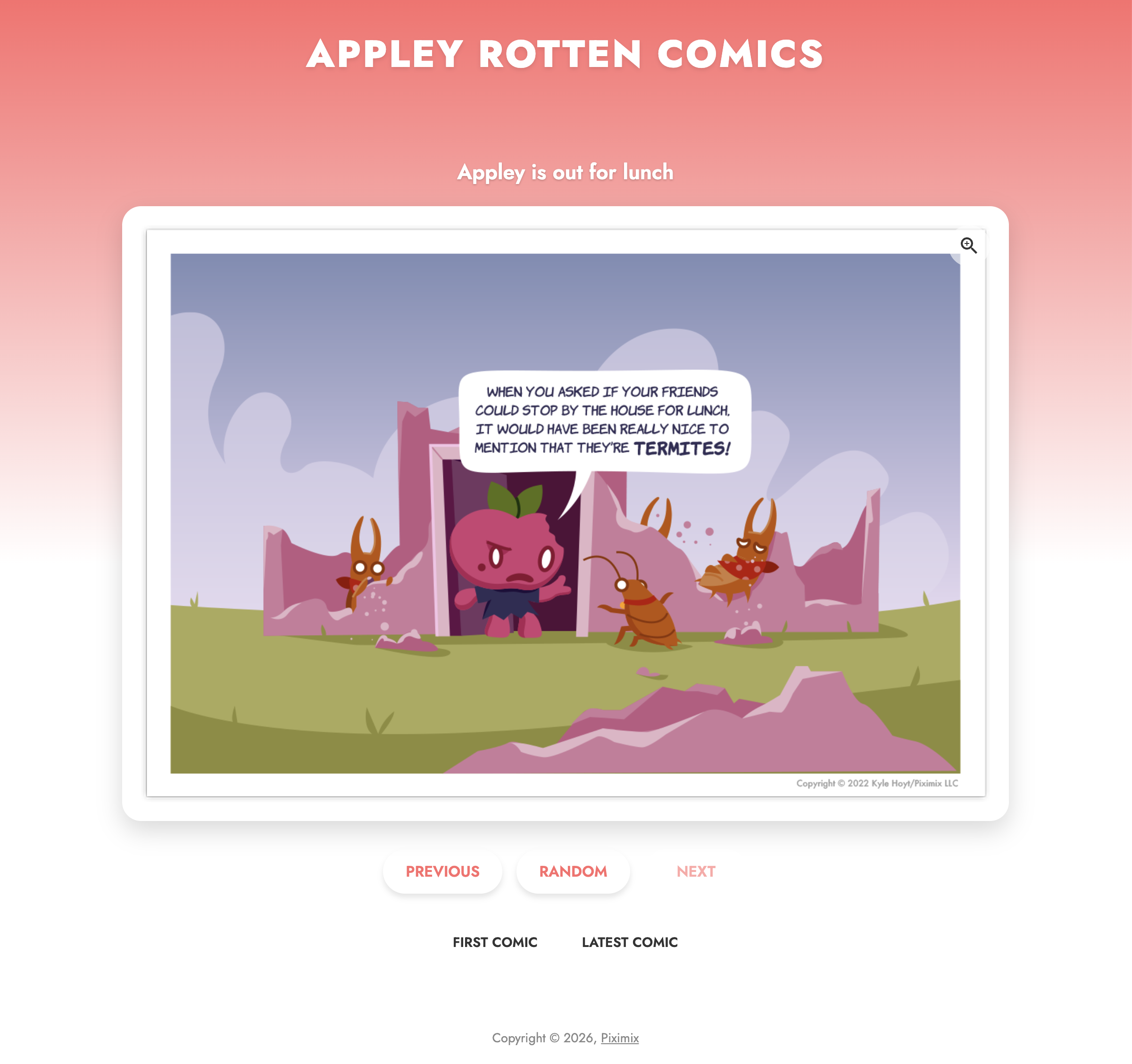
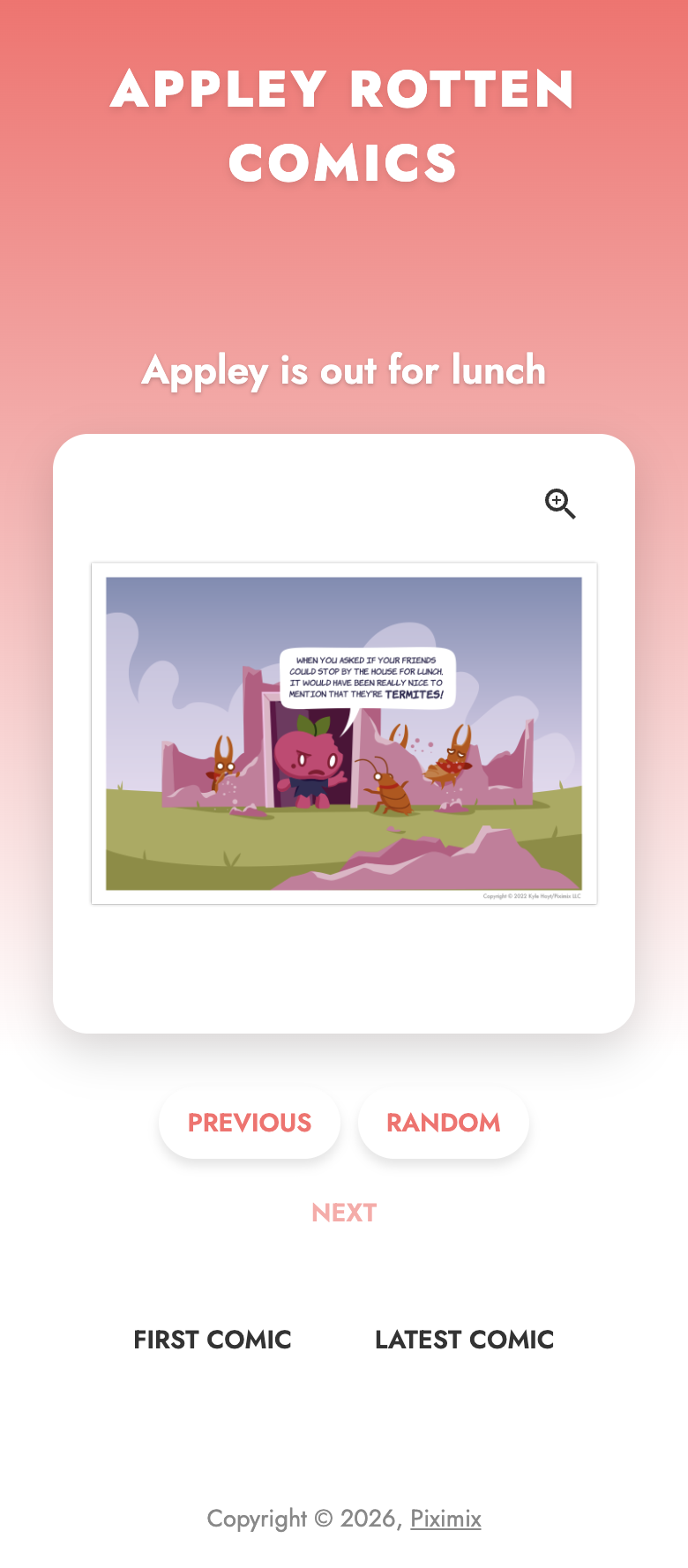
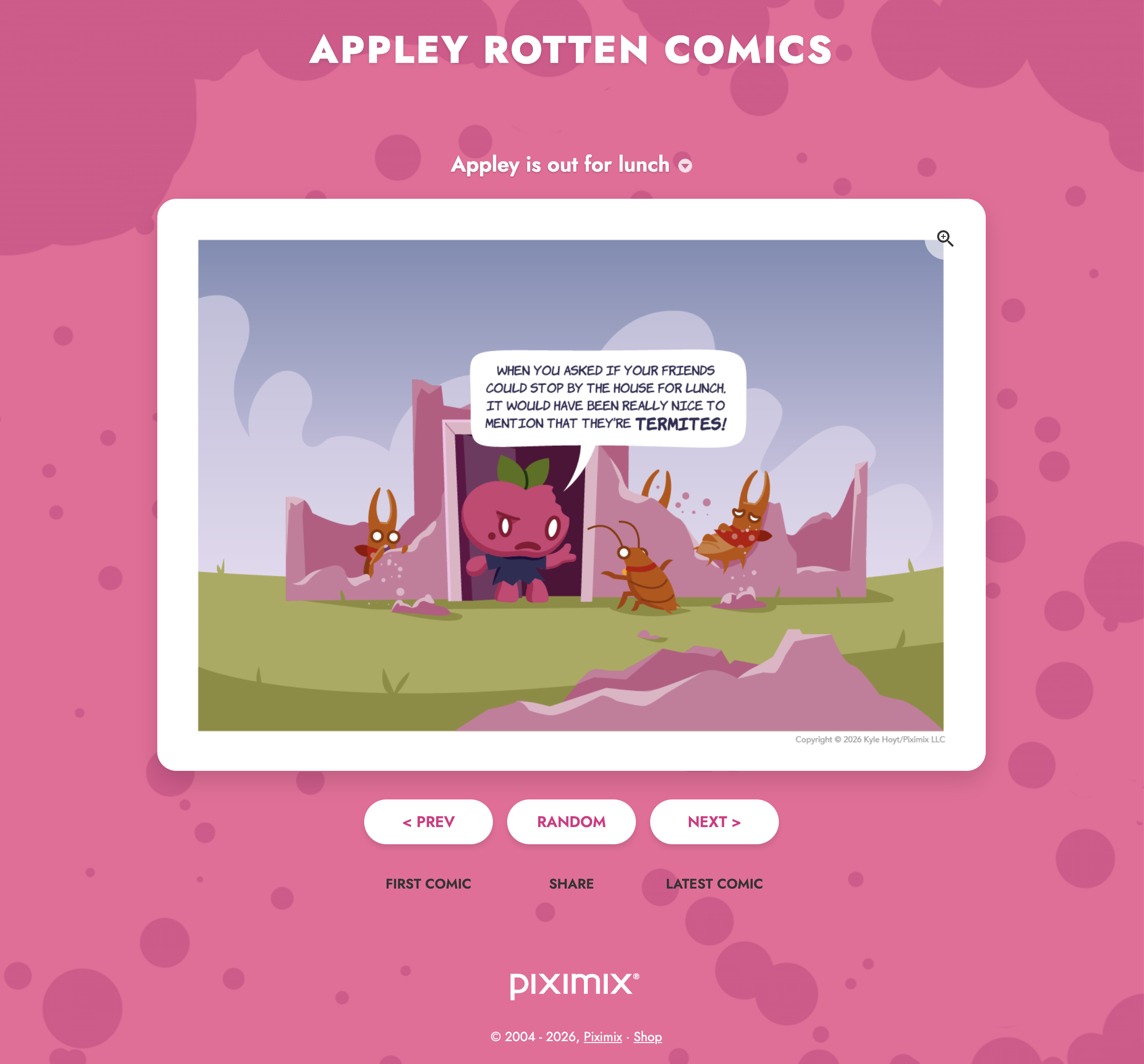
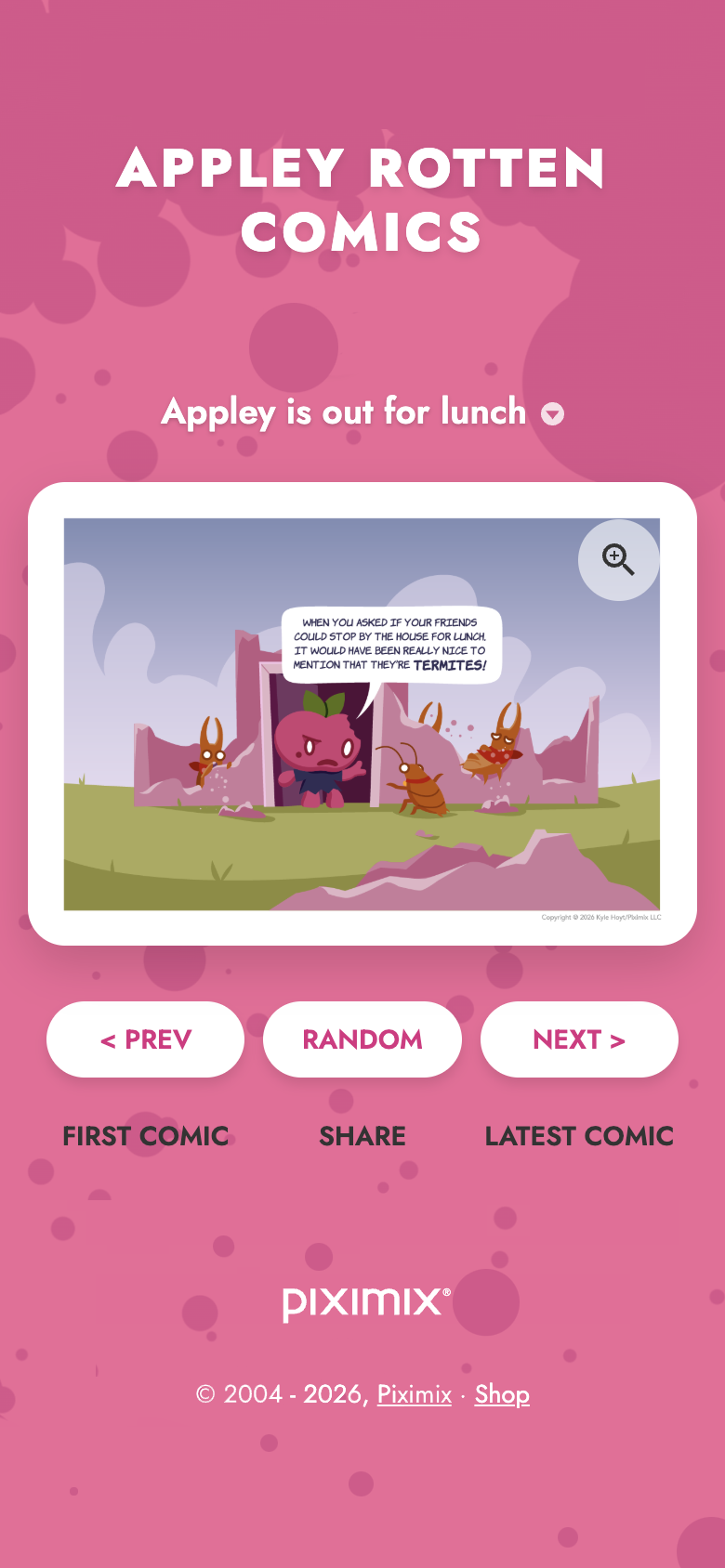
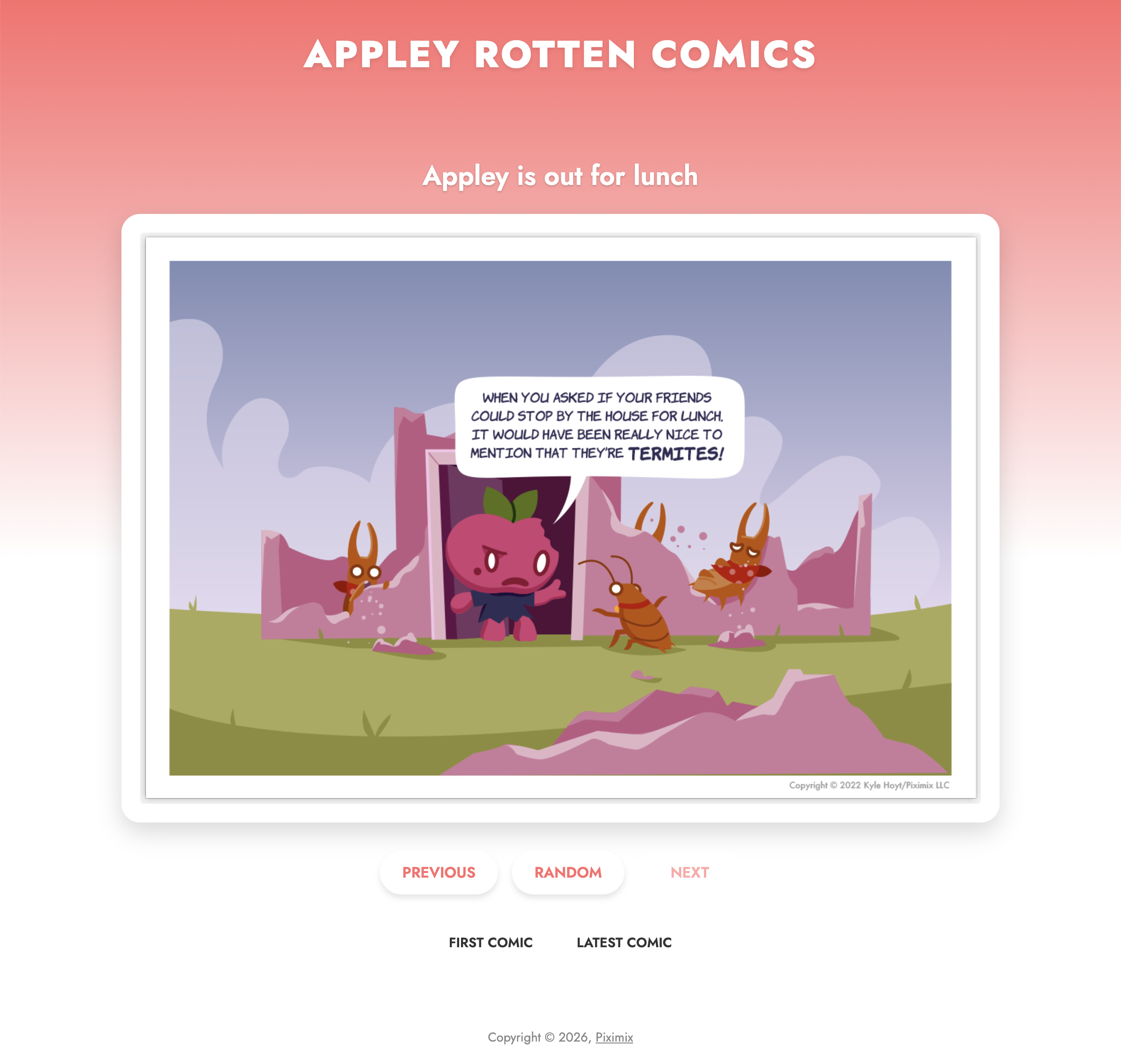
Working directly from the HTML prototype provided by Gemini, I refined key functionality and presentation through a short series of prompts. From previous iterations of the site and competitive samples, I knew exactly what I wanted to build and proceeded directly into code without creating any static mocks or flows. Most assets and branding had previously been designed, so it was simply a matter of folding them into the code. The use of AI greatly increased speed and allowed me to focus on what I was building instead of how to build it — reaching a functional, polished product in hours instead of days.
Key features:
- Streamlined controls: Users can navigate sequentially or choose specific comics, and zoom into panels to appreciate the small details
- Branding: All fonts, colors, and brand assets were applied cleanly without any dilution or modification
- Animation: Clear transition cues and a randomized breathing background added a layer of polish often cut for time in other projects
- HD content: Time savings in implementation allowed me to return to source files for hundreds of comics and update them for modern displays
Added functionality
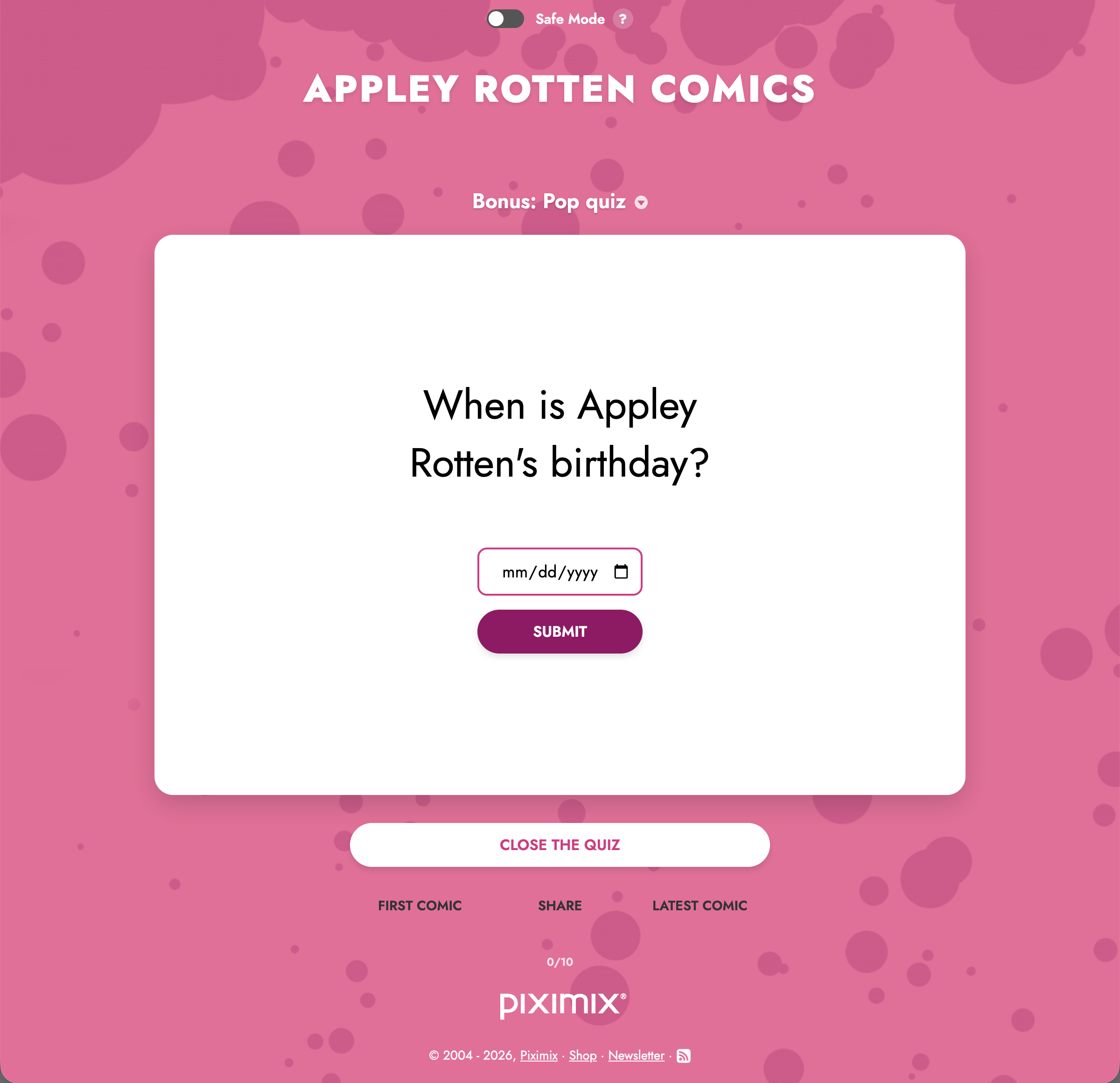
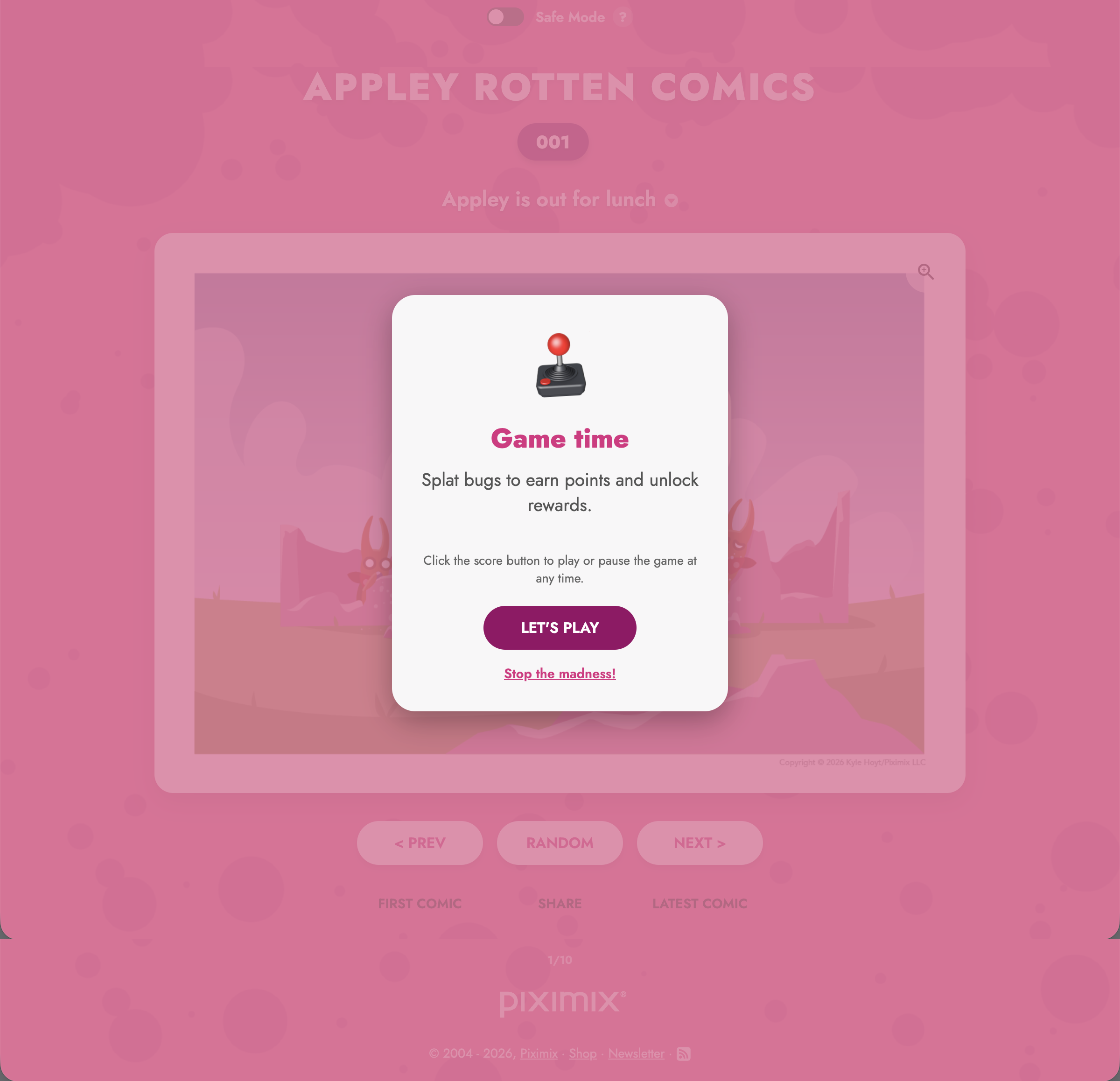
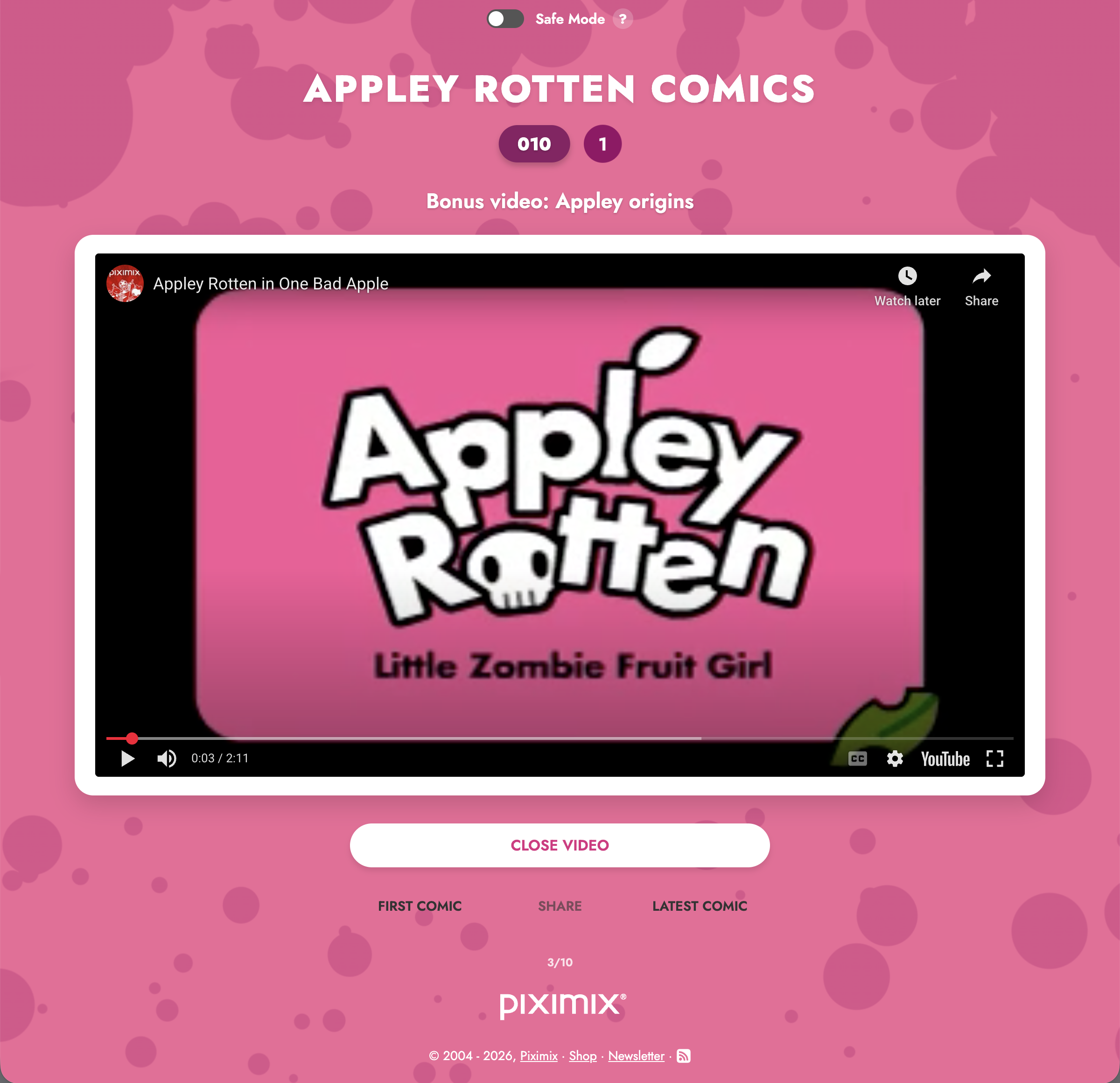
The site was ready to launch in a comparable state to most comic sites, but I wanted to go further — creating a truly unique experience that extended the playful, off-kilter humor of the comic to every aspect of the interaction. I prototyped and tested a number of interactions with AI assistance, developing the most successful ideas into full features.
Key features:
- Achievements: A mysterious counter tracks secrets discovered across multiple visits
- Interactive game: A simple click-based game slowly reveals itself, offering rewards and increasing challenge
- Unlockable bonus comics and videos: Users unlock and view bonus content seamlessly within the existing site
- Hidden UI features: Additional items around the site trigger unique animations and jokes
- Variable outcome comics: Certain comics have alternate outcomes, presenting a different experience between users — and opening the door to a user-guided comic experience in future installments
- Safe mode toggle: A site-wide switch replaces each comic with an alternate version, effectively doubling the content and adding a surreal, awkward tone throughout
Delivery
The original Appley Rotten animation had launched on Valentine's Day 2004, so I soft launched the new site the week before the holiday to test the live experience, then expanded to existing Facebook fans with a celebratory 200th comic on the holiday itself. In this final phase, I used AI to optimize code and implement analytics — enabling me to track individual interactions in more detail than ever before — and completed a week-long SEO pass resulting in full indexing of all site content and a publishing script for future updates.
Bonus content
As part of the launch, I also developed a YouTube channel with AI-assisted animation to promote the brand
Results
1mo
From prompt to complete live experience
~21
Unique comics viewed per visit
28.6%
Early visitor return rate
With a fairly limited launch, early analytics already tell an encouraging story. Dozens of visitors during the soft launch averaged over twenty comics per session — a strong signal that the reading experience is doing exactly what it was designed to do. Nearly a third returned within the first four weeks without any active promotion, and these early users show signs of gradual secret discovery and achievement completion across return visits.
Most of all, I'm personally happy to have the character back in my life and look forward to creating new art and experiences to share with new and old fans alike.
The story continues
Experience the final live site for yourself. How many secrets can you find?